
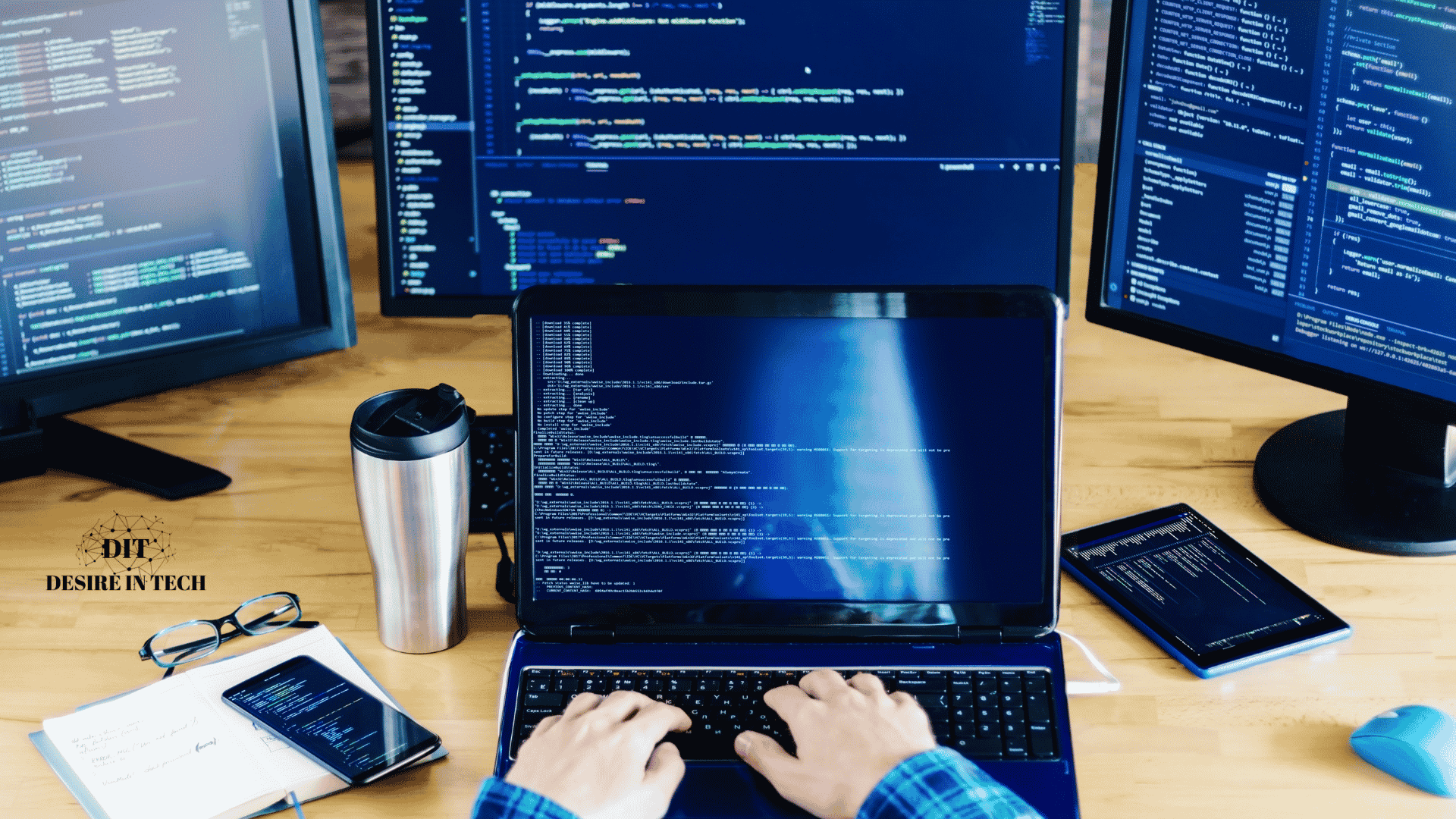

AI & Software Development

Desire E
Artificial intelligence is revolutionizing how software is designed, built, and deployed—transforming developers from code writers into strategic innovators.
The Rise of AI-Powered Development Tools
The landscape of software development has undergone a seismic shift in recent years, driven by the rapid advancement of artificial intelligence technologies. AI-powered development tools have emerged as game-changers, fundamentally altering how developers approach coding, problem-solving, and project management. From intelligent code completion systems like GitHub Copilot and Amazon CodeWhisperer to sophisticated AI coding assistants that understand natural language prompts, these tools are transforming the developer workflow in unprecedented ways.
The proliferation of AI developer tools reflects a broader trend toward automation and intelligence augmentation in the software development lifecycle. Modern AI coding tools leverage machine learning models trained on billions of lines of code from open-source repositories, enabling them to suggest contextually relevant code snippets, auto-complete complex functions, and even generate entire code blocks from simple descriptions. This shift represents more than just convenience—it's a fundamental reimagining of how humans and machines collaborate in the creative process of software creation.
What makes these AI-powered development tools particularly revolutionary is their ability to learn and adapt to individual coding styles and project-specific patterns. Unlike traditional IDEs with static autocomplete features, AI for developers incorporates deep learning algorithms that understand syntax, semantics, and even the intent behind code. Tools like TabNine, Replit Ghostwriter, and OpenAI's Codex have demonstrated remarkable proficiency in understanding developer needs, reducing boilerplate code, and accelerating development cycles by up to 40% in some use cases.
The adoption curve for AI in software development has been remarkably steep. According to recent industry surveys, over 70% of professional developers now use at least one AI-powered tool in their daily workflow. This widespread adoption is driven by tangible benefits: reduced time spent on repetitive tasks, improved code consistency, and the ability to explore new programming languages and frameworks with AI-assisted guidance. As these tools continue to evolve, integrating more sophisticated natural language processing and contextual awareness, they're becoming indispensable partners in the software development process.
How Machine Learning is Reshaping Code Quality and Testing
Machine learning has introduced a paradigm shift in how development teams approach code quality assurance and testing strategies. Traditional testing methodologies, while effective, often require extensive manual effort and struggle to keep pace with rapidly evolving codebases. AI software development tools powered by machine learning algorithms can now analyze code patterns, identify potential vulnerabilities, and predict areas most likely to contain bugs—all before a single test is written.
AI-driven code quality tools employ sophisticated static analysis techniques enhanced by machine learning models trained on millions of code samples. These systems can detect code smells, anti-patterns, and potential security vulnerabilities with unprecedented accuracy. Tools like DeepCode (now part of Snyk), SonarQube's AI features, and Amazon CodeGuru use machine learning to provide real-time feedback on code quality, suggesting improvements based on best practices learned from vast code repositories. This proactive approach to quality assurance shifts the focus from reactive bug fixing to preventive code optimization.
In the realm of software testing, artificial intelligence in programming has enabled the creation of intelligent test generation systems that can automatically create comprehensive test suites. Machine learning algorithms analyze application behavior, user interactions, and code coverage patterns to identify untested edge cases and generate targeted test scenarios. Tools like Testim, Mabl, and Functionize leverage AI to create self-healing tests that automatically adapt to UI changes, dramatically reducing test maintenance overhead and improving test reliability.
The impact of machine learning on continuous integration and continuous deployment (CI/CD) pipelines has been particularly transformative. AI-powered testing platforms can prioritize test execution based on code changes, predict test failure probability, and optimize testing resources for maximum efficiency. By analyzing historical test results, code commits, and system metrics, these intelligent systems can identify risky deployments before they reach production, reducing the time between development and delivery while maintaining high quality standards. This machine learning-enhanced approach to testing represents a fundamental evolution in how teams balance speed and reliability in modern software development.
From Manual Debugging to Intelligent Error Detection
Debugging has traditionally been one of the most time-consuming and frustrating aspects of software development, with developers spending an estimated 35-50% of their time identifying and fixing bugs. The advent of AI for debugging is transforming this landscape, introducing intelligent systems that can detect, diagnose, and even suggest fixes for errors with minimal human intervention. These AI-powered debugging tools represent a quantum leap from traditional breakpoint-and-inspect methodologies, offering predictive insights and automated remediation capabilities that were unimaginable just a few years ago.
Modern AI debugging assistants utilize machine learning models trained on vast datasets of code errors, stack traces, and resolution patterns to provide contextual error analysis. When an exception occurs, these intelligent systems don't just identify the line of code where the error manifested—they trace back through the execution path, analyze variable states, and compare the error signature against millions of similar cases to suggest the root cause. Tools like Sentry's AI-powered error tracking, Rookout's dynamic debugging platform, and Microsoft's IntelliCode go beyond simple error reporting to provide actionable insights that accelerate the debugging process.
The integration of natural language processing into debugging tools has created entirely new possibilities for error resolution. Developers can now describe a bug in plain English, and AI systems can parse application logs, analyze code behavior, and suggest potential fixes based on similar issues encountered across the broader developer community. This capability is particularly valuable when dealing with complex, distributed systems where errors may originate from intricate interactions between multiple services. AI-assisted debugging tools can correlate events across microservices, identify cascading failures, and pinpoint the originating issue in systems where manual debugging would require hours or days of investigation.
Predictive debugging represents the cutting edge of AI in software development, where machine learning models analyze code in real-time to identify potential bugs before they manifest as runtime errors. By learning from patterns in code repositories and bug databases, these systems can flag suspicious code patterns, warn about potential null pointer exceptions, identify race conditions, and alert developers to memory leaks during the coding process itself. This proactive approach to debugging shifts the paradigm from reactive problem-solving to preventive code hygiene, reducing technical debt and improving overall software reliability. As these AI systems continue to learn and evolve, they're becoming increasingly adept at understanding not just syntactic errors, but semantic issues that reflect deeper logical problems in code implementation.
AI-Assisted Architecture Decisions for Scalable Software Solutions
Software architecture decisions have traditionally relied heavily on human expertise, experience, and intuition—making architectural choices some of the most consequential and difficult decisions in the development process. Artificial intelligence in programming is now providing architects and senior developers with powerful analytical tools that can evaluate design patterns, predict scalability challenges, and recommend architectural approaches based on project requirements and historical data from thousands of similar applications.
AI-powered architecture assistants can analyze existing codebases to identify structural anti-patterns, assess technical debt, and suggest refactoring strategies that improve maintainability and performance. These systems use graph neural networks to understand the relationships between components, modules, and services, creating comprehensive architectural visualizations that highlight coupling, cohesion, and potential bottlenecks. Tools like Lattix, Structure101, and emerging AI architecture advisors can simulate the impact of architectural changes, helping teams make informed decisions about system design without the need for extensive prototyping.
In the domain of microservices and distributed systems, AI developer tools are proving invaluable for optimizing service boundaries and communication patterns. Machine learning algorithms can analyze service dependencies, data flow patterns, and computational requirements to suggest optimal service decomposition strategies. These AI systems consider factors like team structure, deployment constraints, and performance requirements to recommend architectures that balance scalability, resilience, and operational complexity. By processing vast amounts of data about successful and failed architectural patterns, AI assistants can provide insights that would take human architects years of experience to develop.
The future of software development increasingly involves AI-assisted architectural evolution, where intelligent systems continuously monitor application performance, user behavior, and system health to recommend architectural adaptations. These AI platforms can identify when specific components are becoming bottlenecks, suggest caching strategies, recommend database optimization approaches, and even propose infrastructure changes to improve cost-efficiency. By combining real-time telemetry data with machine learning models trained on architectural best practices, these systems enable dynamic architecture that adapts to changing requirements and usage patterns. This represents a fundamental shift from static architectural planning to continuous architectural intelligence, where AI serves as a trusted advisor throughout the software lifecycle.
The Future Developer: Augmented by Intelligence, Not Replaced
One of the most persistent questions surrounding AI in software development centers on whether artificial intelligence will eventually replace human developers. This concern, while understandable, fundamentally misunderstands the relationship between AI and human creativity in software engineering. The evidence increasingly suggests that AI is not replacing developers but rather augmenting their capabilities, elevating them from tactical code writers to strategic problem-solvers and architectural thinkers. The future developer will be someone who leverages AI coding tools to handle routine tasks while focusing their cognitive energy on higher-order challenges that require human judgment, creativity, and ethical reasoning.
The reality of AI for developers is that it excels at pattern recognition, code generation, and optimization of well-defined problems—but struggles with the ambiguous, creative, and contextually nuanced aspects of software development that humans handle intuitively. AI can generate boilerplate code efficiently, but it cannot understand business requirements from a vague stakeholder conversation. It can suggest bug fixes based on patterns, but it cannot navigate the political and organizational complexities of a large-scale refactoring project. It can optimize algorithms, but it cannot decide whether a feature should exist in the first place. These uniquely human capabilities—empathy, strategic thinking, ethical reasoning, and creative problem-solving—remain irreplaceable and increasingly valuable as AI handles more routine development tasks.
The most successful developers in the AI-augmented future will be those who embrace these tools as force multipliers rather than viewing them as threats. Studies of developers using AI coding tools show productivity gains of 25-55% on certain tasks, allowing them to complete more projects, experiment with new technologies, and dedicate time to learning and professional development. This augmentation effect creates a virtuous cycle where developers use AI to accelerate routine work, freeing time to develop the strategic and creative skills that differentiate excellent developers from mediocre ones. The developer role is evolving toward that of an orchestrator—someone who understands what needs to be built, can effectively communicate with AI systems to generate components, and possesses the judgment to evaluate, integrate, and refine AI-generated outputs.
Looking forward, the software development profession is likely to see increased specialization and evolution of roles rather than wholesale replacement. We're already seeing the emergence of AI-prompt engineers who specialize in effectively communicating with AI coding assistants, AI-testing specialists who design and maintain intelligent quality assurance systems, and architectural advisors who focus on high-level system design while delegating implementation details to AI tools. The barriers to entry for creating functional software may lower, democratizing software development for non-programmers, but the ceiling for what expert developers can achieve will rise dramatically. The future belongs to developers who view AI as a collaborator—an incredibly capable junior partner that handles the tedious aspects of coding while human developers focus on the creative, strategic, and inherently human aspects of building software that solves real problems for real people.
FAQs
What are the best AI tools for software developers? The best AI developer tools currently available include GitHub Copilot for code completion and generation, ChatGPT and Claude for problem-solving and code explanation, Amazon CodeWhisperer for AWS-focused development, TabNine for multi-language autocomplete, Replit Ghostwriter for collaborative coding, and Cursor for AI-integrated development environments. The optimal tool depends on your specific needs, programming languages, and development workflow.
How is AI being used in software development? AI in software development is being utilized across the entire development lifecycle: intelligent code completion and generation during coding, automated testing and bug detection during quality assurance, predictive debugging for error resolution, code review automation for maintaining standards, documentation generation from code analysis, architecture optimization recommendations, and performance monitoring and optimization in production environments. These applications collectively accelerate development while improving code quality.
Can AI replace software developers? No, AI cannot fully replace software developers. While AI coding tools excel at generating boilerplate code, suggesting solutions to well-defined problems, and automating repetitive tasks, they lack the critical thinking, creativity, business understanding, and ethical judgment required for effective software development. AI serves as an augmentation tool that makes developers more productive, not a replacement for human expertise. The future of software development involves collaboration between human intelligence and artificial intelligence.
What are the benefits of using AI in programming? The key benefits of artificial intelligence in programming include increased development speed (up to 40% faster for certain tasks), reduced time spent on repetitive coding, improved code quality through AI-powered analysis, faster bug detection and resolution, automated test generation and maintenance, better code documentation, reduced cognitive load on developers, easier learning of new languages and frameworks, and more time available for strategic and creative work. These benefits translate to faster time-to-market and higher-quality software.
What are the risks of AI in software development? The primary risks and limitations include over-reliance on AI-generated code without proper understanding, potential security vulnerabilities in AI-suggested code, intellectual property concerns regarding training data, bias in AI models leading to suboptimal recommendations, reduced learning opportunities for junior developers who rely too heavily on AI, code homogenization reducing innovation, privacy concerns with cloud-based AI tools processing proprietary code, and the challenge of maintaining and debugging AI-generated code that developers don't fully understand. Responsible AI use requires awareness of these limitations and implementing appropriate safeguards.
How will AI change the future of software development? The future of software development with AI will feature low-code and no-code platforms powered by sophisticated AI, natural language programming where developers describe desired functionality in plain English, AI-driven architecture that adapts to changing requirements, automated refactoring and technical debt management, predictive maintenance and self-healing systems, enhanced collaboration between distributed teams through AI facilitation, and the emergence of new development roles focused on AI orchestration and oversight. Software development will become more accessible to non-programmers while simultaneously enabling expert developers to tackle increasingly complex challenges.
